

Reviewed by: Scot C. Holman, MD, Santa Fe Surgery Center, Board-Certified Laser Cataract & Lens Replacement Surgeon.
Cataracts remain a major global cause of vision impairment and blindness. According to the World Health Organization (WHO), cataract affects more than 94 million people worldwide. WHO also reports that nearly half of people worldwide facing cataract-related blindness still need access to sight-restoring surgery.
Thankfully, cataract surgery has made impressive progress, evolving from basic techniques to highly sophisticated laser-assisted procedures. Today, the goal extends beyond removing a cloudy lens. Modern cataract surgery combines precise surgical techniques with advanced intraocular lens (IOL) technology to improve visual function and, depending on the IOL and individual eye, potentially reduce dependence on glasses.
One of these technological advances is femtosecond laser assistance. The key laser cataract surgery benefits are tied primarily to the precision and repeatability of specific surgical steps, including capsulotomy, lens fragmentation, and, when appropriate, astigmatism-correcting corneal incisions.
This guide explains how laser-assisted cataract surgery works, how it differs from traditional cataract surgery, and how its technology may contribute to precise and predictable surgical planning.
Table of Contents
About Cataracts
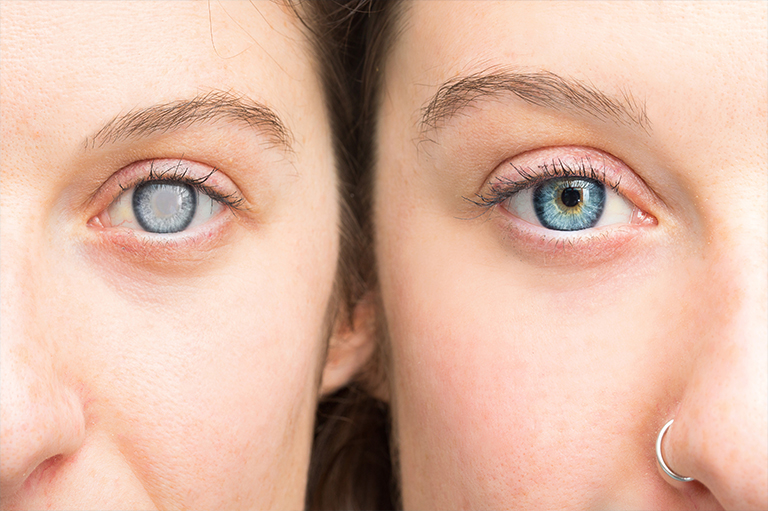
A cataract is a clouding of the eye’s usually clear lens that blurs vision over time. This condition develops as the proteins in the lens begin to degrade and clump together, obstructing light from passing through. Age is the most common risk factor for cataracts, though exposure to ultraviolet (UV) light, certain medications, and medical conditions like diabetes can also play a part.
Cataracts become increasingly common with age. According to the National Eye Institute (NEI), more than half of Americans aged 80 or older either have cataracts or have already undergone cataract surgery. Age-related changes in the lens can begin earlier, and the American Academy of Ophthalmology notes that people over age 60 commonly begin developing some lens clouding, although noticeable vision problems may occur later.
Diagnostic Procedures
During an eye exam, ophthalmologists dilate the patient’s eyes and examine them under a microscope to diagnose cataracts. Early cataract symptoms can often be managed with updated glasses or contact lens prescriptions. However, as cataracts progress, surgical intervention becomes the only viable treatment. Consulting a cataract specialist ensures patients receive a comprehensive diagnosis and personalized treatment plan.
Preoperative testing also helps the surgeon evaluate factors that can influence surgical planning and cataract surgery outcomes, including corneal shape, astigmatism, eye measurements, overall eye health, and the type of IOL selected.
Surgical Options
Both traditional and laser-assisted cataract surgery remove the cloudy lens and replace it with an artificial lens. Still, laser assistance changes how certain steps are performed by using a femtosecond laser for precise incisions, capsulotomy, and lens fragmentation instead of performing those steps entirely by hand.
Basic Cataract Surgery
Basic cataract surgery involves making a small incision in the eye, breaking down the cloudy lens with an ultrasonic probe, and replacing it with an artificial intraocular lens (IOL).
In traditional phacoemulsification, the surgeon manually creates the corneal incision and an opening in the lens capsule. Ultrasound energy then breaks the cloudy lens into small pieces that can be removed before implanting the IOL.
Advanced Laser Cataract Surgery
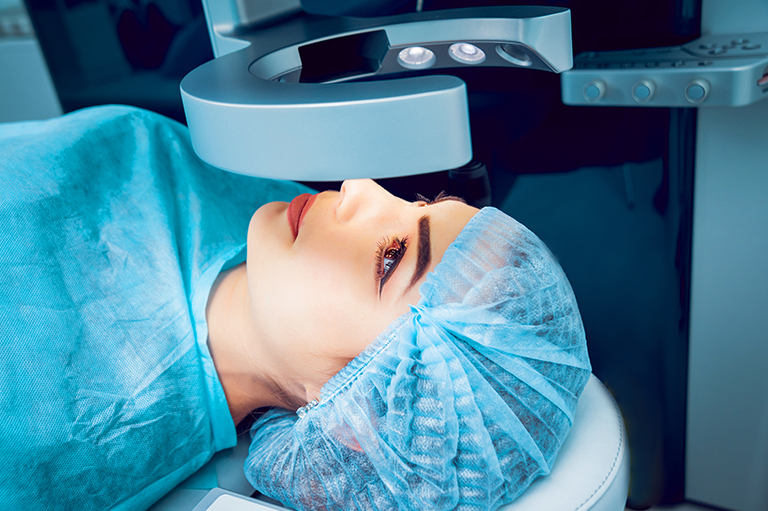
Femtosecond laser cataract surgery uses computer-guided laser technology to perform or assist with selected stages of cataract surgery. Imaging technology maps the eye’s structures, allowing the surgeon to plan highly precise incisions.
Depending on the surgical plan, the femtosecond laser can create the opening in the lens capsule, soften or fragment the cataract before removal, and create precise corneal incisions. This automation can improve the precision and repeatability of these individual surgical steps and may reduce the ultrasound energy needed to break apart the cataract.
For patients with certain levels of astigmatism, the laser may also create carefully positioned arcuate corneal incisions designed to reduce astigmatism. Precise capsulotomy can also support accurate positioning and centration of certain advanced IOLs.
However, it is important to separate surgical precision from guaranteed visual superiority. Research has not consistently demonstrated that laser-assisted surgery produces better overall vision or fewer complications than well-performed traditional phacoemulsification in routine cases. The most appropriate technique depends on the eye, treatment goals, IOL choice, and surgeon’s recommendation.
Consulting with a cataract specialist can help determine whether advanced laser cataract surgery is the best option for your visual needs.
Traditional Cataract Surgery vs. Femtosecond Laser-Assisted Cataract Surgery
Both approaches remove the cloudy natural lens and replace it with an IOL. The main difference is how the surgeon performs certain steps.
| Comparison | Traditional (Manual) Cataract Surgery | Femtosecond Laser-Assisted Cataract Surgery |
| Precision | The surgeon manually performs key steps such as corneal incisions and capsulotomy. Modern manual cataract surgery is highly precise and well established. | A computer-guided femtosecond laser can automate selected steps, providing highly precise and repeatable incisions, capsulotomy, and lens fragmentation. |
| Astigmatism Correction | Astigmatism may be addressed through treatment planning that can include a toric IOL or manually created corneal incisions. | The laser can create precisely planned arcuate corneal incisions to help manage certain levels of astigmatism. Toric IOLs may also be used when appropriate. |
| Recovery | Many patients notice improving vision within days, although complete healing takes longer. | Recovery is generally similar to traditional cataract surgery. Laser assistance has not been shown to consistently shorten overall recovery time. |
| Ideal Candidate | Suitable for many patients who require cataract removal. | Consider it when laser precision, astigmatism management, or certain advanced-technology IOL strategies are part of the surgical plan. Final suitability requires an eye examination. |
Neither approach is automatically “better” for every patient. The AAO notes that both are effective surgical options, while surgeon experience and individualized treatment planning remain important contributors to successful outcomes.
Lake Eye’s Premium RXSIGHT™ Light Adjustable Lens (LAL)
The Light Adjustable Lens (LAL) is an advanced IOL option that allows the implanted lens prescription to be adjusted after cataract surgery. Unlike traditional IOLs, the ophthalmologist can adjust this lens using controlled UV light treatments after the eye has healed sufficiently. This post-surgical customization can help refine the patient’s refractive result based on their visual goals.
Because IOL selection and surgical technique address different aspects of cataract treatment, your cataract specialist can explain how lens technology and surgical technology may work together as part of your personalized treatment plan.
Benefits of Advanced Laser Cataract Surgery
The most meaningful benefits of laser cataract surgery come from the technology’s ability to add precision and repeatability to specific surgical steps. These benefits can include:
1. Precise, Computer-Guided Surgical Planning
Femtosecond laser systems use detailed imaging of the eye to help surgeons plan the size, depth, and location of selected incisions. The laser then follows this programmed treatment plan, allowing certain steps to be performed with high precision and consistency.
This is especially relevant when the position and shape of the capsulotomy matter to the overall surgical plan.
2. Consistent Capsulotomy Creation
During cataract surgery, the surgeon creates a circular opening in the thin capsule surrounding the natural lens. With femtosecond laser cataract surgery, the laser can perform this step to create a consistently sized, shaped, and centered opening.
A precise capsulotomy may support predictable IOL positioning and centration, which can be especially important when using advanced lens technologies.
3. Reduced Ultrasound Energy During Lens Removal
The femtosecond laser can pre-fragment or soften the cataract before the surgeon removes it. Breaking the lens into smaller pieces beforehand can reduce the amount of ultrasound energy required during phacoemulsification.
Reducing ultrasound energy may benefit selected eyes, although clinical significance varies from patient to patient.
4. Precise Astigmatism Management
Astigmatism occurs when the cornea has an irregular curvature that prevents light from focusing evenly on the retina. In appropriate cases, laser-assisted cataract surgery can create precise arcuate incisions in the cornea to help modify its curvature and reduce certain levels of astigmatism.
Astigmatism management may also involve a toric IOL or other treatment strategies. Your surgeon will determine the best approach based on corneal measurements and your desired visual outcome.
5. Greater Repeatability in Selected Surgical Steps
Because the laser follows a computer-programmed treatment plan, it can reproduce certain incisions and surgical steps with high consistency. This repeatability is a major technological distinction between laser-assisted and fully manual cataract surgery.
However, the technology does not replace the cataract surgeon. An experienced ophthalmologist still plans the procedure, operates the laser, removes the fragmented cataract, implants the IOL, and manages the patient’s care before and after surgery.
6. Potential for More Customized Vision Planning
Modern cataract surgery increasingly combines precise eye measurements, advanced IOL technology, astigmatism management, and surgical planning around the patient’s visual goals. Laser assistance can become one component of that customized approach when clinically appropriate.
Importantly, individual cataract surgery outcomes depend on more than the laser itself. Eye health, pre-existing conditions, corneal astigmatism, IOL selection, accurate measurements, surgical technique, and healing can all affect the final result.
Clear Vision with Advanced Laser Cataract Surgery
Key Takeaways
- Femtosecond laser technology can automate selected stages of cataract surgery, including capsulotomy, lens fragmentation, and certain corneal incisions.
- The major benefits of laser cataract surgery include precision, consistency, reduced ultrasound energy in some cases, and the ability to create precisely planned incisions for astigmatism management.
- Recovery time is generally similar for traditional and laser-assisted cataract surgery.
- Greater surgical precision does not mean every patient will achieve better vision with laser-assisted surgery. Research has not consistently shown superior routine visual outcomes compared with well-performed traditional cataract surgery.
- IOL choice, astigmatism, eye health, accurate measurements, surgical expertise, and healing can all influence final cataract surgery outcomes.
- Patients wondering specifically whether they qualify for laser-assisted surgery should discuss candidacy with their cataract specialist.
Closing Words
Modern cataract surgery is no longer simply about removing a cloudy lens. Technologies such as femtosecond lasers, advanced diagnostic measurements, astigmatism management, and sophisticated IOLs allow surgeons to plan treatment with greater precision and personalization.
Femtosecond laser assistance stands out for automating several technically demanding surgical steps with high precision and repeatability. For selected patients, it can also become part of a broader strategy for astigmatism correction and advanced IOL placement.
At the same time, patients should have realistic expectations. Laser technology is a surgical tool, not a guarantee of perfect vision or freedom from glasses. The best treatment plan is the one developed around the patient’s eye health, measurements, visual priorities, and surgeon’s clinical judgment.
If you’re considering cataract surgery, consult your cataract specialist to discuss your options and determine the best course of action for your vision needs.
If you are in Lady Lake, Leesburg, Tavares, Mount Dora, The Villages, or Wildwood, FL, USA, Lake Eye Associates can assist you. Schedule an appointment with us today.
**The information provided in this blog on laser cataract surgery is intended for general informational purposes only. It is not intended as a substitute for professional medical advice, diagnosis, or treatment. Always seek the advice of your physician or other qualified health provider with any questions you may have regarding your medical condition.**
Frequently Asked Questions
1. Does laser cataract surgery produce better vision than traditional cataract surgery?
Not necessarily. Laser technology provides greater precision for selected surgical steps, but studies have not consistently demonstrated superior overall visual outcomes compared with well-performed traditional cataract surgery.
2. How does a femtosecond laser help during cataract surgery?
The laser can assist with corneal incisions, create a precise capsulotomy, and fragment the cloudy lens before removal. These steps can improve surgical precision and, in some cases, reduce the ultrasound energy needed.
3. Can laser cataract surgery correct astigmatism?
It can help manage certain levels of corneal astigmatism by creating precisely positioned arcuate incisions. Depending on the amount and type of astigmatism, a toric IOL or another strategy may also be recommended.
4. Is recovery faster after laser cataract surgery?
Not necessarily. According to the American Academy of Ophthalmology, recovery time is generally similar for traditional and laser-assisted cataract surgery. Individual recovery depends on eye health, surgical factors, and healing.
5. Does femtosecond laser cataract surgery eliminate the need for glasses?
Laser assistance alone does not determine whether you will need glasses. Postoperative vision and glasses dependence depend on IOL selection, astigmatism, refractive targets, existing eye conditions, and individual healing.
Advanced laser cataract surgery brings computer-guided precision to selected stages of an already highly effective procedure. Rather than replacing the surgeon’s expertise, femtosecond laser technology gives ophthalmologists another tool for precise capsulotomy, lens fragmentation, and astigmatism management when appropriate.
Whether those advantages are meaningful for your eyes depends on your cataract, corneal measurements, IOL selection, visual goals, and overall eye health. A comprehensive cataract evaluation can help you understand which surgical approach and lens technology best match your needs.


