

Reviewed By: Dr. Vinay Gutti, MD, Board-Certified Laser Cataract & Lens Replacement, Corneal Surgeon
Have your contact lenses started feeling uncomfortable lately, even though you haven’t changed your prescription or wearing routine? Perhaps they feel perfectly fine in the morning, but by afternoon, your eyes become dry, gritty, or irritated.
If you live in Central Florida, the changing season may be contributing to that discomfort. As the humid summer months give way to Florida’s drier fall and winter conditions, changes in the environment can affect how well your eyes retain moisture.
For contact lens wearers, these changes make cornea care especially important. Your cornea depends on a healthy tear film for clear vision and comfortable contact lens wear. When that tear film becomes unstable, even familiar lenses may begin to feel different.
If your contact lenses feel dry, gritty, or uncomfortable as Florida’s dry season begins, changes in the environment may be affecting your tear film. Understanding the causes of contact lens dryness can help you recognize when simple adjustments may help and when professional cornea care may be needed.
In this guide, we’ll explore why contact lenses may feel different during Florida’s dry season, practical ways to manage discomfort, and when a professional eye examination may be necessary.
Table of Contents
Why Does Florida’s Dry Season Affect Contact Lens Comfort?
Florida generally experiences a relatively drier season during the cooler months, although weather conditions vary throughout the state. The National Weather Service provides information about seasonal climate patterns affecting Central Florida.
The National Eye Institute (NEI) identifies dry and windy environments as factors that can contribute to dry eye symptoms. For contact lens wearers, these conditions may make existing dryness or irritation more noticeable.
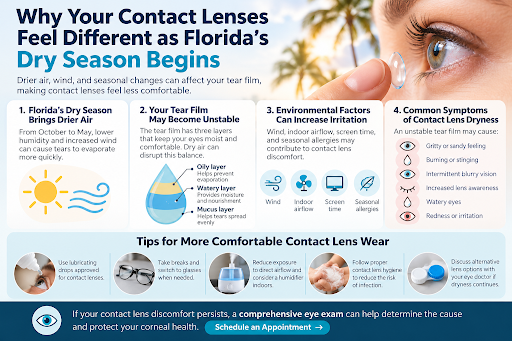
Lower Humidity Can Make Tears Evaporate Faster
Your eyes are naturally protected by a thin layer of tears. This tear film helps maintain a smooth surface and keeps the cornea comfortable.
When the surrounding air becomes drier, tears may evaporate more quickly. Contact lenses can become less comfortable when the tear film is unable to maintain adequate lubrication.
Wind and Indoor Airflow Can Increase Irritation
Florida’s cooler months often encourage outdoor activities, from walking and golfing to spending time on patios.
However, direct wind exposure may increase tear evaporation. Indoor fans, car vents, and air-conditioning systems can also contribute to discomfort when airflow is directed toward the eyes.
For someone who already experiences mild dryness, these conditions may make contact lenses feel increasingly uncomfortable throughout the day.
Seasonal Allergies May Contribute to Discomfort
Dryness is not always the only explanation for irritated eyes.
Pollen, dust, and other airborne irritants can contribute to itching, redness, and watering. When allergies occur alongside dry eye symptoms, contact lens wear may become more challenging.
Because allergies and dry eyes can share certain symptoms, an eye examination can help determine the underlying cause.
How Do Contact Lenses Affect Your Tear Film?
The tear film helps keep the surface of your eyes smooth, moist, and comfortable. It contains three important layers: an oily layer that helps prevent evaporation, a watery layer that provides moisture, and a mucus layer that helps tears spread evenly across the eye. The National Eye Institute explains how these layers work together to protect the eye’s surface.
| Tear film layer | Main function | Why it matters for contact lens comfort |
| Oily outer layer | Helps prevent tears from evaporating too quickly | Supports moisture retention |
| Watery middle layer | Keeps the eye moist and nourishes surface tissues | Helps maintain lubrication |
| Inner mucus layer | Helps tears spread and adhere to the eye’s surface | Supports an even tear film |
When the tear film becomes unstable, contact lenses may feel less comfortable. You might notice burning, grittiness, or temporary changes in vision.
Why Do Contact Lenses Feel Dry at the End of the Day?
Several factors can contribute to discomfort later in the day:
- Extended contact lens wear
- Tear evaporation during exposure to dry air
- Reduced blinking while using digital devices
- An unstable tear film
- An unsuitable lens fit or material
- Underlying dry eye disease
If your lenses regularly become uncomfortable by afternoon, changing the weather-related factors in your routine may help. However, persistent symptoms should be evaluated rather than automatically attributed to the season.
Quick Fact: A widely cited U.S. study estimated that approximately 16.4 million adults had diagnosed dry eye disease. This is a historical research estimate, not a current count of everyone experiencing dry eye symptoms.
Why Contact Lens Dryness May Continue Even When the Weather Improves
Florida’s seasonal weather can contribute to contact lens dryness, but persistent discomfort may have other causes.
Meibomian gland dysfunction (MGD): Small glands along your eyelids produce oils that help prevent tears from evaporating too quickly. When these glands become blocked or do not work properly, your tears may evaporate faster, making contact lenses feel dry or irritating.
Contact lens fit: Lenses that do not fit properly may move excessively or interact poorly with the eye’s surface. This can cause irritation, fluctuating vision, or a persistent awareness of your lenses.
Contact lens deposits: Proteins, oils, and other substances can accumulate on reusable contact lenses over time. These deposits may affect comfort and contribute to irritation, particularly if lenses are not cleaned or replaced as recommended.
If discomfort continues despite seasonal adjustments, an eye examination can help identify whether the cause involves tear-film quality, lens fit, deposits, or another eye condition.
What Are the Signs of Contact Lens Dryness?
Contact lens dryness can cause symptoms that range from mild irritation to difficulty wearing lenses comfortably.
Common symptoms include:
- A gritty or sandy feeling
- Burning or stinging
- Intermittent blurry vision
- Increased awareness of the contact lenses
- Watery eyes
- Discomfort after prolonged wear
- Redness or irritation
Not every symptom indicates a serious problem. However, some contact lens-related conditions require prompt medical attention.
How Can You Tell Normal Dryness From a Possible Eye Problem?
| What you notice | What it may indicate | What to do |
| Mild dryness after several hours | Tear film instability or environmental dryness | Remove lenses if uncomfortable and discuss recurring symptoms with your eye doctor |
| Gritty or scratchy sensation | Dry eye or surface irritation | Remove lenses and monitor symptoms |
| Itching with watering | Possible allergies or irritation | Arrange an evaluation if symptoms persist |
| Recurring fluctuating vision | Tear film, lens fit, or corneal concerns | Schedule an eye examination |
| Significant redness or worsening pain | Possible inflammation or infection | Remove lenses and contact an eye doctor immediately |
| Light sensitivity or sudden blurry vision | Possible corneal or other eye condition | Seek prompt medical attention |
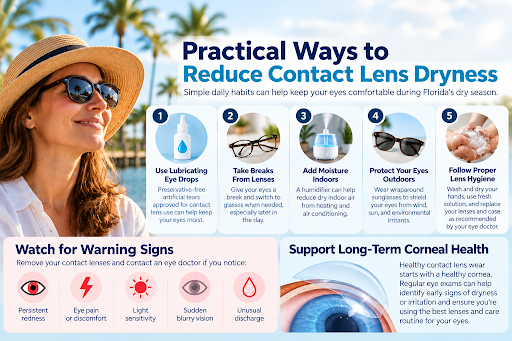
The Centers for Disease Control and Prevention (CDC) identifies eye pain, redness, light sensitivity, sudden blurry vision, and unusual discharge as possible warning signs of contact lens-related eye infections.
If these symptoms occur, remove your lenses immediately and contact an eye doctor. Do not resume contact lens wear until your eye care professional advises that it is safe.
How to Reduce Contact Lens Dryness During Florida’s Dry Season
You may not be able to control the weather, but several everyday habits can help support eye comfort.
1. Use Lubricating Drops Approved for Contact Lenses
Artificial tears may help relieve dryness, but not every eye drop is appropriate for use while wearing contacts.
Choose products specifically labeled for use with your lens type, or ask your eye doctor for a recommendation.
Avoid using redness-relief drops to manage recurring irritation without medical guidance. If your symptoms continue, an eye examination may identify a problem that lubricating drops alone cannot address.
2. Take Breaks From Contact Lens Wear
If your lenses become uncomfortable, remove them and switch to prescription glasses.
Avoid extending your wearing schedule simply because you have a busy day. Follow the schedule recommended by your eye care professional.
Do not sleep in contact lenses unless your eye doctor has specifically prescribed overnight wear. Even approved extended-wear lenses carry infection risks.
3. Reduce Exposure to Direct Airflow
Environmental adjustments can make a difference when dry air contributes to your symptoms.
Try these habits:
- Keep car vents and indoor fans directed away from your face.
- Consider using a properly maintained humidifier when indoor air is dry.
- Wear wraparound sunglasses outdoors on windy days.
- Take regular breaks from computer and smartphone use.
- Blink fully and frequently during activities requiring prolonged concentration.
4. Follow Proper Contact Lens Hygiene
Seasonal discomfort should never lead you to overlook contact lens hygiene.
The CDC’s contact lens safety recommendations emphasize several important practices:
- Wash and dry your hands before handling contact lenses.
- Use the recommended disinfecting solution for reusable lenses.
- Never add fresh solutions to old solutions already in the case.
- Keep contact lenses away from tap water, pools, and showers.
- Replace lenses according to the prescribed schedule.
- Replace your contact lens storage case regularly.
Proper hygiene helps reduce the risk of infection, although it cannot prevent every cause of dryness.
5. Discuss Alternative Contact Lens Options
If dryness continues despite good contact lens habits, your current lenses may need reassessment.
Your eye doctor may consider a different lens material, replacement schedule, or design based on your tear film and corneal health.
Some patients may benefit from daily disposable lenses. For certain individuals with severe dry eye or irregular corneas, specially fitted scleral lenses may be appropriate.
Scleral lenses rest on the white portion of the eye and create a fluid-filled space over the cornea. Not everyone needs specialty lenses. The appropriate choice depends on a professional examination.
Pro Tip: Keep an updated pair of prescription glasses available when traveling, working, or enjoying outdoor activities. If your contact lenses become uncomfortable, you can remove them without feeling pressured to continue wearing them.
Why Is Cornea Care Important for Contact Lens Wearers?
The cornea is the transparent, dome-shaped surface at the front of your eye. It helps focus incoming light and serves as a protective barrier.
Because contact lenses interact directly with the ocular surface, maintaining a healthy cornea is essential for comfortable and safe lens wear.
Most seasonal contact lens discomfort does not indicate permanent corneal damage. However, persistent dryness, inflammation, or improper contact lens use can sometimes contribute to corneal complications.
When Should You See a Cornea Specialist?
If contact lens discomfort continues despite changes to your daily routine, a cornea specialist can evaluate your corneal health and discuss appropriate treatment options based on your examination findings.
An optometrist can assess contact lens fit, tear film quality, and many dry eye concerns. When a condition requires specialized corneal diagnosis or treatment, an ophthalmologist with corneal expertise may be involved.
Depending on your symptoms, an examination may involve assessing:
- Tear film stability
- Corneal surface health
- Signs of inflammation or injury
- Possible corneal infection
- Underlying corneal abnormalities
At Lake Eye Associates, Dr. Scott R. Wehrly and Dr. Vinay Gutti are local cornea surgeons who provide specialized care for patients with corneal conditions. When additional evaluation or treatment is needed, their expertise helps patients explore appropriate options based on their individual eye health needs.
What Happens During a Dry Eye or Corneal Examination?
Your eye care professional may ask about your symptoms, contact lens schedule, screen habits, medications, and environmental exposures.
The examination may include a slit-lamp evaluation to examine the eye’s surface and eyelids. Additional testing may assess tear production or how quickly the tear film breaks apart after blinking.
These assessments can help distinguish dry eye disease from allergies, lens-fitting concerns, and other ocular surface conditions.
Key Takeaways
- Florida’s seasonal weather changes may make contact lenses feel less comfortable, particularly during dry or windy conditions.
- Contact lens dryness may also involve tear-film instability, meibomian gland dysfunction, improper lens fit, or deposits on reusable lenses.
- Small adjustments to your daily routine may improve comfort, but recurring symptoms deserve professional evaluation.
- Remove your lenses and seek prompt eye care if you experience eye pain, significant redness, light sensitivity, sudden blurry vision, or unusual discharge.
Understanding Your Contact Lens Comfort
Contact lenses should support your daily activities without ongoing discomfort. If your lenses begin to feel different as Florida’s seasons change, noticing when symptoms occur can help you discuss the problem with your eye doctor.
At Lake Eye Associates, our eye care team can evaluate your eye health, identify potential causes of discomfort, and recommend appropriate next steps. If dryness or irritation continues, schedule an eye examination to learn more about your options.
Experiencing Contact Lens Discomfort? Schedule an Eye Examination
If your contact lenses have become uncomfortable as Florida’s dry season begins, Lake Eye Associates can help you better understand your symptoms.
Our eye care team provides evaluations and specialized corneal services designed around individual patient needs.
Whether you’re experiencing recurring dryness, irritation, or concerns about your corneal health, a professional examination can help determine the appropriate next steps.
Schedule an Appointment With Lake Eye Associates to discuss your eye comfort and vision concerns.
Medical disclaimer: The information provided in this blog is intended for general informational purposes only. It is not a substitute for professional medical advice, diagnosis, or treatment. Always seek guidance from your physician or another qualified healthcare professional regarding your specific eye health concerns.
Frequently Asked Questions
1. Can dehydration make contact lenses feel uncomfortable?
Dehydration may contribute to eye discomfort, but drinking more water alone will not necessarily resolve contact lens dryness. Maintaining adequate hydration supports overall health, while persistent dry eye symptoms may require targeted treatment.
2. Does contact lens solution affect eye dryness?
Yes. Certain contact lens solutions contain preservatives or ingredients that may irritate sensitive eyes. If discomfort occurs after cleaning or inserting your lenses, ask your eye doctor whether a different solution is appropriate.
3. Can hormonal changes affect contact lens comfort?
Yes. Hormonal changes associated with menopause, pregnancy, or certain medications can affect tear production and stability, potentially making contact lenses less comfortable.
4. Is it safe to wear contact lenses while using allergy medication?
Many people can wear contacts while taking allergy medications. However, some antihistamines may contribute to dry eye symptoms. Ask your healthcare professional about suitable options if discomfort develops.
5. Can makeup or skincare products contribute to contact lens irritation?
Yes. Makeup particles, oils, and skincare products can irritate the eye or contaminate contact lenses. Apply makeup after inserting your lenses and remove your lenses before taking off eye makeup.


