

Reviewed by: Vinay Gutti, MD, Board-Certified Laser Cataract & Lens Replacement, Corneal Surgeon
Summer in Florida often means more time outdoors, more pool days, more travel, and more exposure to heat, humidity, wind, sunscreen, and water. For contact lens wearers, those everyday summer moments can sometimes lead to contact lens discomfort, dryness, redness, or corneal irritation from contact lenses.
Your cornea is the clear front surface of your eye. It helps focus light so you can see clearly, and it also acts as a protective barrier. When contacts are worn too long, exposed to water, or used during dry or dusty conditions, the cornea may become irritated or more vulnerable to infection.
At Lake Eye Associates, our cornea care team helps patients protect long-term comfort, vision, and eye health through careful evaluation, contact lens guidance, and advanced treatment when needed.
Table of Contents
Why Summer Can Be Tough on Contact Lens Wearers
Contact lenses can be safe and comfortable when they are properly fitted, cleaned, and worn as directed. However, summer adds extra challenges. Heat can make the eyes feel dry. Air conditioning can reduce moisture. Wind and pollen can increase irritation. Water activities can expose lenses to germs. Sunscreen, sweat, and cosmetics can also get near the eyes and affect comfort.
We offer contact lens exams and fittings that evaluate vision, corneal shape, pupil size, and tear film quality to help determine which lenses may be appropriate for each patient. This matters because a lens that works well in one season may feel less comfortable when your summer routine changes.
Quick Fact
The CDC advises contact lens wearers to remove lenses before swimming or showering and to avoid rinsing or storing contacts in water. Water can cause soft lenses to change shape, stick to the eye, and scratch the cornea, making it easier for germs to enter.
How Contact Lenses Can Affect the Cornea
The cornea is the clear outer layer at the front of the eye and helps focus light for clear vision. Because contact lenses sit directly on the eye’s surface, they must fit correctly and allow the cornea to stay healthy.
When lenses are overworked, poorly cleaned, damaged, or exposed to water, they may contribute to irritation, dryness, small surface scratches, or infection risk. The National Eye Institute notes that keratitis is inflammation of the cornea, and contact lens-related infections are a common cause.
Common signs of contact-related corneal irritation may include:
- Burning or stinging
- Redness
- Light sensitivity
- Blurry vision
- Excess tearing
- A gritty or foreign-body sensation
- Discomfort that does not improve after removing lenses
These symptoms do not always mean there is a serious infection, but they should not be ignored, especially if they are new, worsening, or one-sided.
The Biggest Summer Contact Lens Safety Risks
Summer activities can expose contact lens wearers to added risks, especially around water, heat, sweat, sunscreen, and extended wear time. Knowing what to avoid can help protect your eyes, lower your risk of irritation or infection, and keep your vision clearer during Florida’s hottest months.
1. Swimming, Showering, and Hot Tubs
Water exposure is one of the most important risks for contact lens wearers. The CDC explains that contact lenses and water are a poor combination, including during swimming, showering, or hot tub use. Water is not germ-free, and some germs can become trapped between the lens and the eye.
Pro Tip: Pack prescription sunglasses or backup glasses when going to the pool, beach, lake, or water park. If you need vision correction for swimming, ask your eye care provider whether prescription swim goggles may be safer than wearing contacts in water.
2. Heat, Dryness, and Air Conditioning
Florida summers often involve moving between hot outdoor air and cool indoor air conditioning. This can affect the tear film, which helps keep contact lenses comfortable. Dry eyes can make lenses feel tight, gritty, or less stable on the eye.
Lake Eye Associates notes that dry eye symptoms can affect contact lens candidacy and comfort. If your lenses feel fine in the morning but uncomfortable by afternoon, your tear film may need evaluation.
3. Longer Wear Time During Travel and Events
Summer travel, long drives, outdoor events, and vacations can make it easy to wear contacts longer than recommended. The CDC advises avoiding sleeping in lenses unless directed by an eye care provider, following the replacement schedule, and carrying backup glasses and supplies while traveling.
Wearing lenses beyond the recommended time may increase deposits, dryness, and irritation. It may also make it harder for the cornea to get the oxygen and moisture it needs.
4. Sunscreen, Sweat, and Makeup
Sunscreen is important for skin protection, but it can sting if it gets into the eyes or onto contact lenses. Sweat, facial oils, and makeup can also transfer to lenses. This may cause blurry vision, burning, or a film-like feeling.
Apply sunscreen carefully around the eyes, wash and dry your hands before handling lenses, and insert contacts before applying makeup or sunscreen. Remove lenses before washing your face at the end of the day.
Summer Contact Lens Safety Table
| Summer Situation | How It May Affect the Cornea | Safer Habit |
| Swimming in contacts | Water can introduce germs and irritate or scratch the cornea | Remove lenses before swimming |
| Showering in contacts | Tap water can expose lenses to microorganisms | Take lenses out before showering |
| Wearing lenses all day outdoors | Heat, wind, and pollen may increase dryness | Use approved rewetting drops and take lens breaks |
| Sleeping in lenses after travel | Overnight wear can increase infection risk | Remove lenses before sleep unless directed |
| Reusing old solution | Germs may build up in the case | Use fresh solution every time |
| Ignoring redness or pain | Symptoms may signal keratitis or infection | Remove lenses and call an eye doctor |
How to Reduce Contact Lens Discomfort in Summer

Summer heat, humidity, air conditioning, travel, and longer outdoor days can make contact lenses feel dry, gritty, or uncomfortable. The good news is that many issues can be reduced with healthy lens habits, proper cleaning, and guidance from your eye care provider when symptoms change.
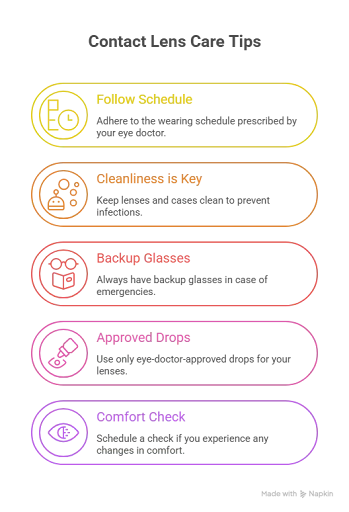
Follow Your Wearing Schedule
Do not stretch daily lenses into a second day or wear monthly lenses longer than prescribed. The FDA recommends following your wearing schedule, rubbing and rinsing lenses as directed, avoiding “topping off” old solution, and keeping lenses away from all water.
Keep Lenses and Cases Clean
If you use reusable lenses, clean and store them exactly as directed. The FDA warns that incorrect use of contact lens solutions can increase the risk of eye infections and corneal ulcers. It also advises replacing the contact lens case every 3 months or as directed.
Bring Backup Glasses
Backup glasses are not just convenient. They are an important safety tool. If your eyes feel irritated, red, or painful, you should remove your contacts and switch to glasses. The CDC recommends carrying backup glasses with a current prescription.
Use Only Eye-Doctor-Approved Drops
Not all drops are designed for use with contact lenses. Some redness-relief drops or medicated drops may not be appropriate while wearing contacts. Ask your optometrist or ophthalmologist which lubricating drops are safe for your lenses and symptoms.
Schedule a Contact Lens Check if Comfort Changes
If your lenses suddenly feel uncomfortable, the issue may be your tear film, lens fit, allergies, dry eye, corneal shape, or an early surface problem. We evaluate contact lens fit by measuring the cornea, pupil, and tear film to support comfort and clear vision.
When Contact Lens Discomfort Needs Prompt Eye Care
Some irritation improves after removing lenses and resting the eyes. However, certain symptoms need prompt attention.
Call your eye doctor if you notice:
- Eye pain
- Unusual redness
- Blurred or reduced vision
- Light sensitivity
- Excessive tearing
- Discharge
- A feeling that something is stuck in the eye
- Symptoms that continue after removing contacts
The lists eye pain, redness, blurred vision, light sensitivity, excessive tearing, and discharge as symptoms of bacterial keratitis and advises contact lens wearers to remove lenses and call an eye doctor immediately if these occur.
Prevent Blindness also advises patients with keratitis symptoms to see an eye doctor right away, noting that delays in diagnosis and treatment can lead to serious complications.
Did You Know?
Not every contact lens wearer needs the same lens type. We offer several lens options, including daily wear lenses, extended wear lenses, rigid gas-permeable lenses, scleral lenses, Rose-K lenses, and hybrid lenses for different visual and corneal needs.
How a Cornea Specialist Can Help
If you have repeated contact lens discomfort, frequent redness, dry eye symptoms, keratoconus, corneal scarring, or recurring infections, a cornea specialist can take a deeper look at the surface and structure of your eye.
We provide cornea care for conditions such as keratoconus, keratitis, Fuchs’ dystrophy, and corneal injury. The practice uses detailed diagnostic technology to examine the cornea and develop care strategies that support comfort, clarity, and long-term eye health.
For patients who need surgical expertise, Lake Eye Associates also has ophthalmologists with corneal training and surgical experience, including board-certified corneal surgeons listed on the physicians page. A cornea surgeon may be involved when advanced corneal disease, transplant evaluation, or specialized surgical treatment is needed.
Key Takeaways
- Summer can increase contact lens irritation because of heat, dryness, wind, pollen, water exposure, sunscreen, and longer wear time.
- Contact lenses should not be worn while swimming, showering, or using a hot tub.
- Water can expose lenses and the cornea to germs that may increase infection risk.
- Remove contacts and call an eye doctor if you experience pain, redness, light sensitivity, discharge, or vision changes.
- A contact lens exam or corneal evaluation can help identify whether discomfort is due to lens fit, dry eye, irritation, infection, or another corneal concern.
- Lake Eye Associates provides contact lens services and specialized cornea care for patients across Wildwood, The Villages, Lady Lake, Tavares, and Leesburg.
Conclusion
Contact lenses can make summer activities more convenient, but they also require careful habits to keep your eyes comfortable and your corneas protected. Simple steps such as removing lenses before water activities, using fresh solution, washing and drying your hands, following your wearing schedule, and keeping backup glasses nearby can make a meaningful difference.
If your lenses feel less comfortable in the summer, do not push through ongoing irritation. Your eyes may be telling you that your lenses, tear film, or corneal surface needs attention. Lake Eye Associates can evaluate your symptoms and help guide you toward safer, more comfortable contact lens use.
Frequently Asked Questions
1. Can daily disposable contacts reduce summer irritation?
Daily disposable lenses may help some patients because they are replaced every day, which can reduce buildup from pollen, sunscreen, oils, and debris. However, they are not the right choice for everyone. Your eye doctor can recommend the safest option based on your prescription, tear film, corneal shape, and wearing habits.
2. Are UV-blocking contact lenses enough for summer eye protection?
No. UV-blocking contacts may help protect the part of the eye covered by the lens, but they do not protect the entire eye or eyelids. Sunglasses with UV protection and a wide-brimmed hat can provide broader protection outdoors.
3. Why do my contacts feel dry in air conditioning?
Air conditioning can reduce moisture in the air, which may cause tears to evaporate faster. When the tear film becomes unstable, contact lenses may feel dry, gritty, or uncomfortable. A dry eye evaluation can help determine whether lubricating drops, lens changes, or treatment may help.
4. Should I throw away contacts after swimming in them?
If water touches your contact lenses, the CDC advises removing them as soon as possible. Depending on the lens type, you may need to throw them away or clean and disinfect them overnight before wearing them again. Daily disposable lenses should be discarded after use.
5. Can contact lens discomfort be a sign of a corneal infection?
Yes, sometimes. Discomfort alone may be mild irritation, dryness, or poor fit, but pain, redness, light sensitivity, discharge, or blurred vision may suggest keratitis or another eye problem. Remove your lenses and contact an eye doctor promptly if these symptoms occur.
CTA
Experiencing summer-related contact lens irritation or concerned about corneal comfort? Schedule an appointment with Lake Eye Associates for contact lens guidance or specialized cornea care in Wildwood, The Villages, Lady Lake, Tavares, or Leesburg.


