

Reviewed by: Jose Alfredo Vazquez, MD, Board-Certified Comprehensive Ophthalmologist
Laser cataract surgery is a very popular procedure across the country to help people regain their vision. This procedure is safe, routine, and rarely results in complications.
Floaters after cataract surgery are a common visual issue that can affect many people. These floaters hang out in your visual field and look like little gray spots or blobs.
While floaters typically don’t affect your ability to see, it’s important to know when a floater is just a floater and when it’s a sign of something more serious. If you’re ever in doubt, it’s best to book an eye exam to know for sure what causes floaters after cataract surgery.
Table of Contents
What Are Floaters?
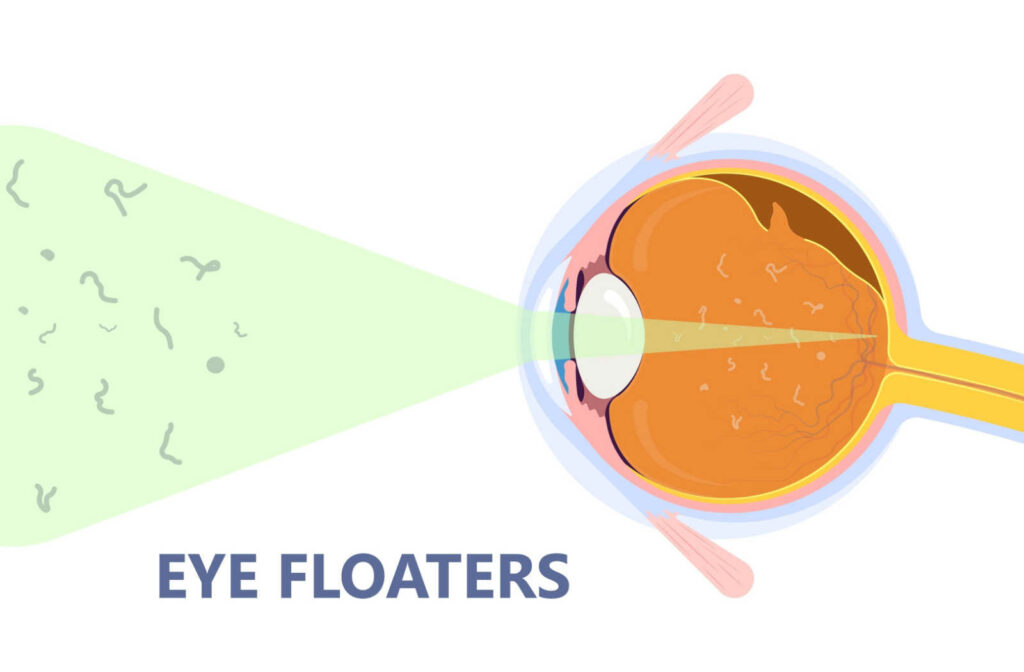
Floaters are small specks or lines that float into your field of vision. Eye floaters can be annoying, but rarely cause any pain or discomfort.
These black or gray blobs are caused by vitreous fibers in the fluid that fills your eyeball. They can cast shadows on your optic nerve, creating a floater in your vision. Floaters will move as your eyes move. If you try to look at one, it’ll likely dart out of the way.
Eye floaters often appear after staring at a bright, plain surface. Floaters usually become more common as we age.
Are Floaters Normal after Cataract Surgery?
Yes, floaters are normal after cataract surgery for many patients. These small gray spots or specks in your vision often occur due to changes in the vitreous gel inside your eye during or after the procedure. While floaters are usually harmless and don’t impact your ability to see, they can sometimes indicate more serious conditions, such as posterior vitreous detachment (PVD) or retinal detachment.
It’s important to monitor your symptoms closely. If you notice a sudden increase in floaters, flashes of light, or any loss of vision, consult your eye doctor right away. Most floaters improve on their own over time, but your doctor can help determine whether any additional treatment is required to protect your vision.
Types of Floaters
There are different types of floaters that you might notice, including:
- Cobweb-like strands that drift across your vision.
- Small, dark specks or dots.
- Ring-shaped floaters, which may indicate a retinal tear.
- Cloud-like floaters that appear hazy or blurry.
Understanding Cataract Surgery
Cataracts cause the natural lens of your eye to become cloudy and hazy, affecting your vision. Cataracts usually develop slowly and can be corrected with surgery.
Once cataracts begin affecting your vision, you can talk to your optometrist or ophthalmologist about laser cataract-removal surgery.
This laser cataract treatment replaces your natural, cloudy lens with an artificial, clear lens. This lens is custom-made to fit your eye. The procedure usually takes just a few minutes and has a fairly quick recovery time.
Cataract surgery is a safe, common procedure performed nationwide, including in our region at The Villages, Lady Lake, FL, USA.

Why Cataract Surgery Causes Floaters
Many patients ask, Does cataract surgery cause floaters? In most cases, cataract surgery does not directly cause floaters. Instead, it may make existing floaters easier to notice because vision becomes clearer after the cloudy lens is removed.
Here are the most common reasons floaters may appear after cataract surgery:
- Clearer vision after surgery: Existing floaters may become easier to see once the cloudy lens is replaced.
- Natural aging changes: The vitreous gel inside the eye becomes thinner with age, making floaters more common.
- Posterior vitreous detachment: The vitreous may pull away from the retina, causing new floaters or flashes.
- Post-surgery inflammation: Mild inflammation can sometimes make visual changes more noticeable during healing.
- Rare retinal issues: In some cases, sudden floaters can signal a retinal tear or retinal detachment.
Most floaters after cataract surgery are harmless and may become less distracting over time. However, sudden new floaters, flashes of light, blurred vision, eye pain, or a curtain-like shadow in your vision should be checked immediately.
The Connection Between Floaters & Cataract Surgery
Floaters can be a completely normal result of cataract surgery, but the causes of floaters can vary depending on certain symptoms.
Preexisting Floaters
It’s possible that you may have had floaters prior to your surgery. You may not have noticed them due to the clouding in your lens caused by cataracts. With a clear lens, these floaters may now be visible.
Posterior Vitreous Detachment (PVD)
Posterior vitreous detachment (PVD) is a condition in which the vitreous (gel-like fluid that fills the eyeball) separates from the retina.
Cataract surgery requires some manipulation of the eye to insert an artificial lens. This can result in vitreous movement, causing PVD. Surgical technique, surgical complications, pre-existing conditions, and retinal tearing can all contribute to PVD.
PVD rarely causes damage to the retina. However, if you experience any vision loss following your surgery, contact your doctor right away.
Retinal Detachment
Retinal detachment is a rare but serious condition associated with floaters, particularly after cataract surgery. This condition occurs when the retina, a thin layer of tissue at the back of the eye, pulls away from its normal position. Without immediate treatment, retinal detachment can lead to permanent vision loss.
Post-surgery changes in the eye, like posterior vitreous detachment or trauma during cataract surgery, may increase the risk of retinal detachment. Nearsighted patients, have undergone previous eye surgeries, or have a family history of retinal issues are at higher risk.
Symptoms of retinal detachment include:
- A sudden increase in floaters.
- Flashes of light in your peripheral vision.
- A “curtain” or shadow spreads across your field of vision.
Retinal detachment affects approximately 1 in 3,000 people annually, but the incidence can become higher for individuals who undergo eye surgeries like cataract procedures. If you experience any of these symptoms, seek medical attention immediately. Delayed treatment can severely impact vision outcomes.
Treatments for retinal detachment include procedures like pneumatic retinopexy, scleral buckling, or vitrectomy, which aim to reattach the retina and preserve vision. For more information about retinal detachment and its treatment, visit the American Academy of Ophthalmology.
Risk Factors for Developing Floaters Post-Surgery
Certain factors can increase the likelihood of developing floaters after cataract surgery, such as:
- Age, as floaters are more common in older adults.
- Preexisting eye conditions like myopia (nearsightedness).
- Previous eye surgeries or trauma.
- Inflammatory eye diseases.
Other Causes
While preexisting floaters and PVD are the most common causes of floaters following cataract surgery, some other causes to know include:
- Eye infection/injury
- Bleeding inside the eye
- Uveitis (inflammation inside the eye)
Detailed Causes of Floaters After Cataract Surgery
Floaters after cataract surgery can arise from various causes, including:
- Changes in the vitreous gel due to aging or surgery.
- Inflammation caused by the surgical procedure.
- Microscopic debris left behind during surgery.
- Retinal tears or detachment may occur in rare cases.
Your eye doctor can perform a dilated eye exam to help determine the cause of your floaters. Naturally occurring floaters or floaters caused by PVD often don’t need treatment.
However, if eye floaters are drastically affecting your vision and quality of life, your doctor may recommend a vitrectomy. A vitrectomy is a surgery that involves replacing the natural vitreous fluid with a different solution.
Can eye floaters after cataract surgery be removed safely?
Yes, eye floaters after cataract surgery can be removed, but treatment is not needed for most patients. Many floaters fade, shift away from the center of vision, or become easier for the brain to ignore over time.
Before recommending treatment, your eye doctor will usually perform a dilated eye exam to check the retina and vitreous. This helps confirm whether the floaters are harmless or connected to another condition that needs care.
Common options include:
- Observation: Most patients only need monitoring, especially if floaters are mild and stable.
- Laser vitreolysis: A specialized laser may break larger floaters into smaller, less noticeable pieces.
- Vitrectomy: A surgical procedure removes the vitreous gel and replaces it with a clear solution.
Treatment may be considered if floaters:
- Block your central vision
- Make reading, driving, or daily tasks difficult
- Do not improve over time
- Significantly affects the quality of life
However, floater treatment is not risk-free. Laser treatment and vitrectomy may carry risks such as retinal damage, bleeding, infection, or new retinal problems. Because of this, doctors usually recommend treatment only when floaters are severe and clearly affecting vision.
If your floaters are mild, stable, or slowly improving, your doctor may suggest watching them instead of removing them. If they appear suddenly or come with warning signs, schedule an eye exam right away.
Treatment Options for Floaters
If floaters are significantly impacting your vision, treatment options may include:
- Observation: In many cases, floaters diminish over time without intervention.
- Laser therapy: A specialized laser can break up larger floaters, making them less noticeable.
- Vitrectomy: This surgical procedure removes the vitreous gel and replaces it with a clear solution.
How Long Do Floaters Last After Cataract Surgery?
Floaters after cataract surgery often improve over time.
- For many patients, floaters become less noticeable within a few weeks to months.
- In some cases, they may persist longer but are generally harmless.
- If floaters do not improve or worsen, consult your eye doctor for further evaluation.
When To See a Doctor
Call your ophthalmologist or eye care provider immediately if you see eye floaters and if:
- You see flashes of light
- You lose your peripheral vision
- You develop eye pain
- You have blurred vision or vision loss
- You notice more frequent floaters
- You notice the floaters change in intensity, size, or shape
While floaters are usually not harmful, they can be a symptom of something more serious. Contact our team to learn more about how we can help you protect your vision. Schedule An Appointment Today.
Key Takeaways
- Floaters after cataract surgery are common and often harmless.
- Cataract surgery may make old floaters more visible because vision becomes clearer after the cloudy lens is removed.
- Age-related vitreous changes, posterior vitreous detachment, inflammation, or retinal issues can also contribute to floaters.
- Most floaters do not need treatment and may become less noticeable over time.
- Sudden new floaters, flashes of light, vision loss, or a curtain-like shadow should be treated as urgent warning signs.
- Safe floater removal is possible in select cases, but treatment should only be considered after a full eye evaluation.
Conclusion
Floaters after cataract surgery can feel frustrating, especially when you expected clearer vision after the procedure. The good news is that most floaters are not dangerous and often become easier to ignore with time.
If your floaters are mild and stable, they may simply be part of the normal adjustment process. But if they appear suddenly, increase quickly, or come with flashes, pain, blurred vision, or shadowed vision, do not wait to seek care. A timely eye exam can help rule out serious retinal concerns and give you peace of mind.
Clearer vision should feel reassuring, not uncertain. If you notice new floaters after cataract surgery, Lake Eye Associates can evaluate your symptoms, check your retinal health, and guide you toward the safest next step for protecting your sight.
I used the uploaded eye-care content for tone and warning-sign alignment, especially around sudden floaters, flashes, curtain-like shadows, and urgent evaluation. Medical accuracy was also checked against Mayo Clinic and National Eye Institute guidance: most floaters do not require treatment, but sudden new floaters, flashes, curtain-like shadow, or peripheral vision loss need prompt evaluation; treatment options such as vitrectomy or laser vitreolysis are generally reserved for select cases because they carry risks.
Frequently Asked Questions
How long do floaters last in your eye after cataract surgery?
Floaters after cataract surgery often appear within weeks and usually fade over several months as the brain adapts. In many cases, they become less noticeable over time, though some may persist without causing harm or affecting overall vision quality.
When should I be concerned about eye floaters?
You should be concerned if floaters appear suddenly, increase rapidly, or are accompanied by flashes of light or a shadow in your vision. These symptoms may signal a retinal tear or detachment and require immediate evaluation by an eye specialist.
How to fix floaters after cataract surgery?
Most post-surgery floaters do not require treatment and improve naturally. In rare cases where floaters severely impact vision, advanced options like laser therapy or vitrectomy may be discussed, but only after careful evaluation of potential risks and benefits.
Do eye drops help with floaters?
Eye drops do not remove or dissolve floaters because floaters form inside the vitreous gel, not on the eye’s surface. However, prescribed drops may help with post-surgical inflammation or dryness, which can sometimes make floaters feel more noticeable.
What happens if you ignore eye floaters?
Ignoring stable, mild floaters is usually harmless. However, overlooking sudden changes or worsening floaters can delay diagnosis of serious retinal conditions. Prompt attention ensures early treatment and reduces the risk of permanent vision loss.
Do post-surgery floaters raise the risk of retinal tears or detachment?
Floaters alone do not always increase risk, but new or sudden floaters after surgery can be associated with vitreous changes that stress the retina. Monitoring symptoms and attending follow-up exams helps detect retinal tears or detachment early.


