

Reviewed By: Dr. Diba Ossareh
Are you or a loved one worried about losing vision because of cataracts while also dealing with glaucoma or diabetes?
If you are a senior living with these conditions, you may feel unsure about surgery. You may wonder if treatment is safe. You may be wondering whether recovery will be harder. The good news is that modern cataract surgery for seniors has become safer, more precise, and highly successful, even for people managing complex eye health conditions.
This visual and practical guide explains how cataract surgery for patients with glaucoma and diabetes is performed today, what makes laser-assisted techniques different, and what to expect step by step.
Table of Contents
Why Cataracts Are More Complex in Seniors with Glaucoma or Diabetes
Cataracts are common in aging adults, but they become more complicated when glaucoma or diabetes is present. Both conditions affect eye pressure, blood flow, and healing ability. That means surgical planning must be detailed and personalized.
For many patients, cataract surgery in seniors requires additional testing, blood pressure control, and a retinal evaluation before the day of surgery.
The Numbers You Should Know
According to the National Eye Institute:
- More than 24 million Americans age 40+ have cataracts.
- Over 3 million cataract surgeries are performed each year in the U.S.
- Diabetes increases cataract risk by up to 60%.
The other data reports that:
- About 11 million Americans over age 40 have some form of glaucoma.
- Diabetes is the leading cause of new blindness in adults.
These numbers show why cataract surgery and diabetes patients require careful coordination between eye specialists.
What Makes Laser Cataract Surgery Different?
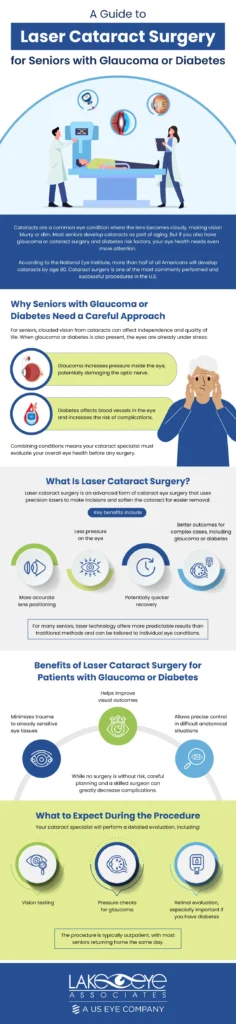
Laser technology has improved how surgeons perform delicate eye procedures. It adds computer-guided precision and reduces manual blade use. For high-risk patients, that precision matters.
Laser-assisted techniques create more accurate incisions and better lens placement, which is important in cataract surgery in seniors with weak eye tissues.
Step 1 – 3D Eye Mapping
Before surgery, advanced imaging scans the eye. The laser creates a customized surgical plan based on:
- Cornea shape
- Lens density
- Eye pressure
- Retina health
For cataract surgery in glaucoma patients, this helps protect the optic nerve and manage intraoperative pressure changes.
Step 2 – Laser Lens Fragmentation
Instead of using only handheld tools, the laser softens and breaks up the cloudy lens. This reduces ultrasound energy inside the eye.
This is helpful in cataract surgery and in diabetes, as diabetic eyes can be more sensitive to inflammation.
Step 3 – Artificial Lens Placement
After removing the cataract, the surgeon places an intraocular lens (IOL). Precision placement reduces glare and improves clarity. This advanced approach is why many seniors now choose laser cataract surgery over traditional techniques.
Special Considerations for Glaucoma Patients
Glaucoma damages the optic nerve. High eye pressure makes this worse. During cataract surgery in patients with glaucoma, surgeons focus heavily on intraocular pressure control.
Managing eye pressure before, during, and after surgery is critical.
Pressure Stability During Surgery
Modern techniques lower pressure spikes during surgery. Laser precision reduces internal fluid shifts, which protects the optic nerve.
Combined Procedures
Some patients may need glaucoma treatment in addition to cataract surgery. This could include:
- Micro-invasive glaucoma surgery (MIGS)
- Drainage device placement
Combining treatments reduces the need for future surgeries and improves long-term pressure control.
Medication Adjustments
Before surgery, your doctor may adjust glaucoma drops to stabilize pressure. After surgery, close monitoring continues for several weeks.
Proper planning makes cataract surgery for glaucoma patients both safe and effective when performed by an experienced cataract specialist.
Special Considerations for Diabetic Patients
Diabetes affects the blood vessels in the retina. High blood sugar delays healing. That is why cataract surgery and diabetes require extra retina monitoring.
Good blood sugar control before surgery improves results.
- Retina Evaluation Before Surgery: A full retinal scan checks for diabetic retinopathy or macular edema. If swelling is present, treatment may be performed before proceeding.
- Inflammation Control: Diabetic eyes may experience increased inflammation. Surgeons use anti-inflammatory medications to prevent complications.
- Post-Surgery Monitoring: Follow-up visits are crucial after cataract surgery for patients with diabetes. Vision may fluctuate temporarily while the retina stabilizes.
When performed correctly, cataract surgery outcomes in seniors with diabetes are highly successful.
What Recovery Looks Like for Seniors?
Recovery after cataract surgery in seniors is usually fast. Many patients see improved clarity within days.
However, patients with glaucoma or diabetes need closer follow-up.
First 24 Hours
- Mild discomfort
- Blurry vision
- Light sensitivity
These symptoms are normal.
First Week
- Vision improves daily
- Eye drops prevent infection
- Avoid heavy lifting
Long-Term Vision
Studies show that over 95% of cataract surgeries result in improved vision. With proper care, most patients regain clear, functional vision for daily activities like driving and reading.
Choosing the Right Cataract Specialist
Not all surgeons handle high-risk cases the same way. When glaucoma or diabetes is involved, experience matters.
A skilled cataract specialist understands pressure management, retina health, and advanced lens technology.
Questions to Ask
- How many high-risk surgeries have you performed?
- Do you offer laser-assisted procedures?
- Do you coordinate with retina or glaucoma specialists?
Choosing the right provider ensures safe cataract eye surgery and long-term success.
Key Takeaways
- Cataracts are common, but more complex with glaucoma or diabetes.
- Cataract surgery in seniors requires personalized planning.
- Cataract surgery for glaucoma patients focuses on pressure protection.
- Cataract surgery and diabetes require retina evaluation and blood sugar control.
- Laser precision improves safety and outcomes.
- Choosing an experienced cataract specialist makes a major difference.
Conclusion
Clear vision should not feel out of reach just because you live with glaucoma or diabetes. Modern cataract surgery in seniors is safer and more advanced than ever. With careful planning, cataract surgery for diabetes and glaucoma patients can restore daily independence and improve quality of life.
At Lake Eye Associates, patients across The Villages, Leesburg, Wildwood, Lady Lake, and Tavares receive advanced eye care built on decades of surgical experience. Our board-certified surgeons specialize in high-risk cases and use advanced imaging and laser precision to deliver safe, tailored outcomes for each patient.
If you or a loved one is considering laser cataract surgery, now is the time to speak with a trusted cataract specialist who understands complex eye health conditions.
Are You Ready To See Clearly Again?
If you live in Central Florida and are managing glaucoma or diabetes, do not delay care. Contact Lake Eye Associates today to schedule a comprehensive consultation and learn whether advanced laser-assisted treatment is right for you.
Your vision matters, so why wait to protect it?
Frequently Asked Questions
Can laser cataract surgery be performed if I have both glaucoma and diabetes?
Yes, laser cataract surgery can be safely performed in patients with both glaucoma and diabetes. However, your surgeon will carefully coordinate your care with retina and glaucoma specialists to monitor eye pressure and retinal health before, during, and after surgery. A personalized surgical plan helps minimize risks and supports the best possible outcome.
Will I need to stop my glaucoma or diabetes medications before surgery?
Most patients continue their usual eye drops and diabetes medications, but you should always tell your surgical team about all medicines you take. Sometimes, adjustments are made before surgery, especially if you use blood thinners or certain glaucoma drops. Your doctor will provide specific instructions to ensure your safety.
Does having glaucoma or diabetes affect the type of lens I can receive during cataract surgery?
Yes, your underlying eye health influences the type of intraocular lens (IOL) recommended. For example, multifocal lenses may not be ideal if you have diabetic retinopathy or advanced glaucoma. Your surgeon will discuss the best lens options based on your vision needs and eye condition.
Are there extra risks of infection or complications after cataract surgery for people with diabetes or glaucoma?
People with diabetes may have a slightly higher risk of infection or slower healing after eye surgery. Glaucoma patients may be at risk for pressure changes. However, with modern techniques, close monitoring, and good blood sugar control, most patients recover well. Your care team will watch for any signs of complications and act promptly if needed.
How often will I need follow-up visits after laser cataract surgery if I have glaucoma or diabetes?
Patients with glaucoma or diabetes typically require more frequent follow-up visits than those without these conditions. Your surgeon will schedule several check-ups in the weeks following surgery to monitor healing, eye pressure, and retinal health. Regular follow-up ensures any issues are detected and managed early, supporting a smooth recovery.
Are You Ready To See Clearly Again?
If you live in Central Florida and are managing glaucoma or diabetes, do not delay care. Contact Lake Eye Associates today to schedule a comprehensive consultation and learn whether advanced laser-assisted treatment is right for you.


