
Our Doctors Are Here for You
If you’ve ever heard the phrase, “the eyes are the window into the soul,” then the cornea would be that window.
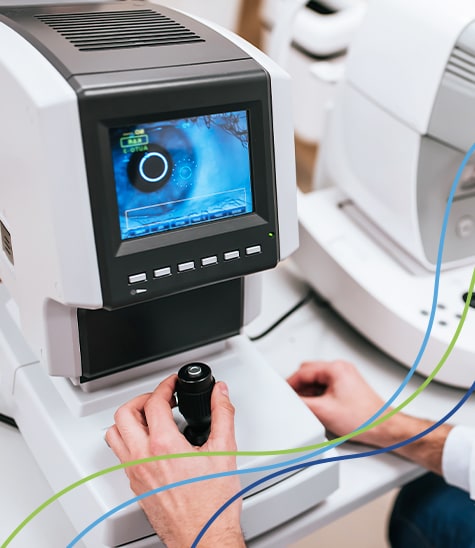
The cornea acts as a starting point for your vision: it helps refract (bend) light onto your retina. However, the cornea can also develop several issues that can affect your vision and eye comfort. Using state-of-the-art technology, a cornea surgeon can examine your cornea’s unique detail and develop strategies to support its health and clarity.
Are you struggling with corneal issues? Contact our cornea specialist in Florida, and our team will work on finding the right treatment for you and your cornea care needs.
What Is the Cornea?
The cornea, located at the front area of the eye, is a layer of clear tissues responsible for refracting light onto your retina. The cornea has 5 separate layers: the epithelium, Bowman’s layer, corneal stroma, Descemet membrane, and endothelium.
While you may have a higher risk of developing a corneal condition because of genetics, your cornea is also your eye’s first line of defense against foreign particles, which can cause scratches or injuries.
Your cornea is also sensitive to conditions like dry eye, and the shape of your cornea may contribute to refractive errors like nearsightedness, farsightedness, and astigmatism.

Corneal Conditions & Diseases
Aside from corneal injuries and refractive errors, several issues can affect your cornea’s health, comfort, and clarity.
The cornea can heal some minor concerns on its own, but more serious problems can affect how light enters your eye, causing blurry vision or even potential vision loss. During our exam, we’ll look for the signs of corneal problems and provide treatments right for your needs.
Keratoconus
Keratoconus is a form of corneal ectasia that occurs when the cornea thins over time, causing it to bulge outwards. Early keratoconus can lead to visual problems that could be corrected using glasses or contact lenses, but it can cause more severe symptoms as it progresses.
Over time, keratoconus can cause light sensitivity, glare, irritation, and redness. It can eventually swell your cornea and create scar tissue that exacerbates your vision problems. You may also have difficulty wearing traditional contact lenses.
Keratoconus can be treated with a corneal transplant.
Keratitis
Keratitis refers to inflammation of your cornea. Viruses, bacteria, and other infections can cause keratitis, but other factors like foreign objects, injury, and wearing contacts for too long can inflame the cornea.
Keratitis can cause blurriness, red eyes, irritation, and light sensitivity. Eye drops can help treat early cases of keratitis, but we may recommend a corneal transplant if these treatments don’t alleviate your symptoms.
Fuch’s Dystrophy
Fuch’s dystrophy is an eye condition that occurs when fluids build up inside your cornea, thickening the corneal stroma and causing the eye to appear cloudy or hazy.
The innermost layer of your cornea, called the endothelium, is responsible for maintaining a healthy balance of fluids inside your cornea. However, Fuch’s dystrophy can break down the endothelial tissues and let fluids enter the stroma.
Medicated eye drops can help manage Fuch’s dystrophy in its early stages, but we may recommend a partial corneal transplant surgery to replace the damaged endothelium.
Cornea Treatments
At Lake Eye Associates in Florida, your vision, eye health, and comfort are our foremost priorities.
Before we recommend any treatment, we examine your eyes to ensure they are healthy enough for the procedure. Eye exams can also help us determine which surgery may be best for you.
Different conditions often require different approaches, but our team is skilled in the latest surgical techniques to help support your corneal health. Take a quick look at our procedures or give us a call to book an appointment.
Corneal Transplant
In some cases, we may recommend a full corneal transplant to help treat diseased or damaged corneas.
Corneal transplants replace the entire cornea with a donor cornea, which is sewn in place. It can take up to a year to recover from a corneal transplant procedure.
DSEK & DMEK
In cases like Fuch’s dystrophy, we may recommend a partial corneal transplant like Descemet’s stripping automated endothelial keratoplasty (DSEK) or Descemet membrane endothelial keratoplasty (DMEK).
In both procedures, your surgeon will replace the damaged or diseased corneal tissue with donor tissue and hold it in place with a gas bubble. Only the inner tissues are removed from your cornea, leaving the outer layers in place.
The difference between the 2 procedures is that DSEK removes the endothelium, Descemet’s membrane, and a small portion of your cornea, while DMEK only removes the endothelium and Descemet’s membrane.
Both DSEK and DMEK have shorter recovery times than a full corneal transplant.
Our Team Is Ready to Help
Corneal procedures can help restore your sight. Please contact our team today to learn more about our procedures and how they can help support your cornea’s clarity and health.
FAQ
How do I know if I need to see a cornea specialist or doctor?
If you’re experiencing persistent blurry vision, light sensitivity, eye pain, or recurring infections, it’s time to visit a cornea specialist. These symptoms may indicate deeper issues that require advanced cornea care, especially if you’ve had previous injuries and dryness. Early evaluation ensures lasting visual protection.
What happens during a cornea exam, and why is it important for my eye health?
A cornea exam includes imaging, surface evaluation, tear-film assessment, and checks for early signs of disease. This detailed approach ensures any damage, infection, or structural change is caught early. Regular cornea care helps protect your sight, especially if you’re prone to dryness and past injuries.
What treatment options are available through cornea care for common eye conditions?
Modern cornea-care offers treatments such as medicated drops, advanced lenses, cross-linking, and surgical procedures to manage scarring, infections, keratoconus, and more. Each plan is personalized for long-term clarity and comfort.
How can a cornea doctor help if I have blurry vision or eye discomfort in Florida?
A cornea doctor identifies underlying causes of discomfort—whether dryness, keratoconus, or infections. Through targeted cornea-care, they restore clarity using advanced diagnostics, protective treatments, and surgical solutions. Florida’s climate can worsen symptoms, making timely care especially important.
How often should I schedule cornea exams to maintain healthy eyes?
Most people benefit from yearly cornea exams, but those with dryness or past surgeries may need more frequent visits. Regular cornea care ensures early detection of subtle changes and helps maintain long-term comfort, clear vision, and readiness if needed.
What makes specialized cornea eye care different from general eye care?
Specialized cornea-care goes beyond routine exams by focusing on the eye’s delicate front surface using advanced imaging, targeted treatments, and surgical expertise. Cornea specialists manage complex issues tied to infections or injuries. This highly focused care ensures precision, safety, and long-term vision protection.
Our Locations


We are a proud partner of US Eye, a leading group of patient-centric, vertically integrated multi-specialty physician practices providing patients with care in ophthalmology, optometry, dermatology and cosmetic facial surgery.




Get social on Facebook


-
Wildwood
- 5431 FL 44, Suite 1, Sumter Summit
- Wildwood, FL 34785
-
P: 352-632-2020
-
The Villages
- 1400 US-441 #521
- The Villages, FL 32159
-
P: 352-750-2020
-
Lady Lake
- 801 CR 466, Suite 102, Sunset Plaza
- Lady Lake, FL 32159
-
P: 352-360-6266
-
Tavares
- 1852 Mayo Drive
- Tavares, FL 32778
-
P: 352-343-2020
-
Leesburg
- 601 E Dixie Avenue, Medical Plaza 201
- Leesburg, FL 34748
-
P: 352-365-2020
-
Santa Fe Surgery Center
- 8564 East CR 466
- The Villages, FL 32162
-
P: 352-561-4950