

Reviewed By: Dr. Vinay Gutti MD
Key Takeaways
Glaucoma is a serious eye condition that can lead to permanent vision loss without showing early warning signs. Many individuals experience glaucoma progression without symptoms for years, believing their eyes are healthy because central vision remains clear. However, glaucoma typically affects peripheral vision first, and these changes often go unnoticed. Certain age groups, medical conditions, and family history can increase a person’s risk of developing the disease. Because symptoms are usually absent, routine eye exams are the only reliable way to detect glaucoma early. When diagnosed in time, treatment can slow or stop vision loss. Ongoing monitoring and consistent local eye care remain essential, even when vision feels normal.
Summary
Glaucoma is a progressive eye disease that often develops silently, causing damage long before vision changes are noticeable. Because early glaucoma symptoms are usually absent, many people do not seek care until significant vision loss has occurred. This article explains how glaucoma damages the eye, why symptoms are frequently missed, who faces the highest risk, and how modern testing can detect the condition early. Understanding risk factors, recognizing subtle warning signs, and committing to regular eye exams are critical steps. Early diagnosis and timely treatment can slow progression and help protect long-term vision.
Have you ever wondered how someone can lose vision from an eye disease without ever noticing a problem until it is too late?
Glaucoma is one of the most misunderstood eye conditions because it often develops quietly. Many people believe that serious eye problems always cause pain, blurry vision, or sudden visual changes. Glaucoma does not usually follow that pattern. In fact, glaucoma can progress without noticeable vision changes for years while permanent damage occurs inside the eye.
This blog explains how glaucoma works, why symptoms are often missed, who is most at risk, and what steps you can take to protect your vision.
Table of Contents
What Is Glaucoma?
Glaucoma is a group of eye diseases that damage the optic nerve. The optic nerve plays a critical role in vision by sending visual information from the eye to the brain. When this nerve is damaged, vision loss begins and cannot be reversed.
In many cases, glaucoma is related to increased pressure inside the eye, known as intraocular pressure. This pressure rises when fluid inside the eye does not drain properly. Over time, elevated pressure slowly damages the optic nerve fibers.
Open-angle glaucoma is the most common form of the disease. It develops gradually and often without pain or obvious symptoms. Because of this slow and silent nature, many people experience glaucoma progression without symptoms and do not realize they have the condition until significant vision loss has occurred.
According to the National Eye Institute, glaucoma is one of the leading causes of irreversible blindness in the United States, largely because it is frequently undetected in its early stages.
Why Glaucoma Often Has No Early Symptoms
One of the most concerning aspects of glaucoma is the absence of warning signs. Early glaucoma symptoms are often mild or completely unnoticed.
This happens for several reasons:
- Vision loss usually begins in peripheral or side vision
- Central vision remains clear for a long time
- Changes occur very slowly over months or years
- The brain adapts to missing visual information
Because central vision is preserved early on, many individuals continue daily activities such as reading, driving, and working without difficulty. This leads to a false sense of security, even as glaucoma progression without symptoms continues.
As a result, many patients are diagnosed only after routine eye exams reveal optic nerve damage or visual field loss.
How Glaucoma Damages Vision Over Time (What’s Happening Inside the Eye)

To understand how glaucoma causes vision loss, it helps to know how the eye normally functions. The eye constantly produces a clear fluid called aqueous humor. This fluid nourishes the eye and maintains normal pressure by draining through a specialized system.
When the drainage system does not work efficiently, fluid builds up. This raises pressure inside the eye and places stress on the optic nerve. Over time, the pressure damages delicate nerve fibers.
As nerve fibers die:
- Small blind spots develop in peripheral vision
- These blind spots slowly expand
- Vision loss becomes more noticeable in later stages
Because this process is gradual, many people are unaware that damage is occurring. This is why glaucoma progression without symptoms is so dangerous. Once optic nerve damage occurs, it cannot be reversed, making early detection critical.
Subtle Signs That Aren’t Always Obvious
Although glaucoma often develops silently, some subtle changes may appear. These early glaucoma symptoms are frequently overlooked or mistaken for normal aging or eye strain.
Possible early clues include:
- Difficulty seeing in dim lighting
- Mild eye discomfort or pressure
- Needing brighter light to read
- Trouble adjusting between light and dark environments
As the disease advances, signs of worsening may begin to appear. These may include narrowing side vision, difficulty driving at night, or bumping into objects.
Unfortunately, these signs of glaucoma worsening often indicate that significant damage has already occurred.
Who Is Most at Risk for “Silent” Glaucoma?
Certain individuals face a higher risk of developing glaucoma and experiencing glaucoma progression without symptoms.
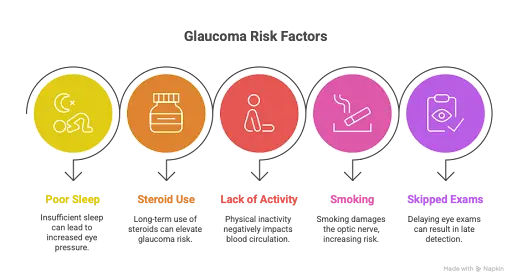
Common glaucoma progression risk factors include:
- Age over 40
- Family history of glaucoma
- African American, Hispanic, or Asian ancestry
- Diabetes or cardiovascular disease
- Prolonged steroid use
- Previous eye injuries
Having one or more glaucoma progression risk factors does not mean vision loss is inevitable. However, it does mean that regular eye exams are especially important. A qualified glaucoma doctor can monitor eye health and detect changes early.
Why “I Can See Fine” Doesn’t Rule Out Glaucoma
A common misconception is that good eyesight means healthy eyes. Many patients say they do not need an eye exam because they can see clearly.
This belief is misleading. Glaucoma typically affects peripheral vision first, leaving central vision intact until later stages. You can see clearly straight ahead while losing side vision without noticing it.
This is why professional eye exams are essential. A vision doctor evaluates eye pressure, optic nerve health, and visual fields. These tests reveal glaucoma long before symptoms appear.
Relying on vision alone is not enough to rule out disease.
Tests That Detect Glaucoma Before You Notice Vision Changes
Modern eye care includes advanced diagnostic tools that allow doctors to detect glaucoma early. These tests are painless and can identify problems long before vision is affected.
Common glaucoma tests include:
- Measurement of intraocular pressure
- Optic nerve imaging
- Visual field testing
- Corneal thickness assessment
These tests work together to detect glaucoma progression without symptoms. A skilled vision doctor interprets the results over time to monitor changes and guide treatment decisions.
Routine testing is a key part of long-term vision care, especially for individuals with known risk factors.
How Fast Can Glaucoma Progress Without Treatment?
The rate of glaucoma progression varies from person to person. Some individuals experience very slow changes over decades, while others may see faster damage.
Factors influencing progression include:
- Level of eye pressure
- Age at diagnosis
- Overall health
- Presence of other eye conditions
- How early does treatment begins
Without treatment, signs of glaucoma worsening become more likely. Vision loss may progress from mild peripheral changes to severe tunnel vision or blindness.
The Centers for Disease Control and Prevention notes that early detection and treatment significantly reduce the risk of vision loss from glaucoma.
What You Can Do Now: Prevention, Screening, and Next Steps
While glaucoma cannot always be prevented, its progression can often be slowed or stopped when detected early.
Important steps include:
- Scheduling routine comprehensive eye exams
- Informing your eye provider about family history
- Following prescribed treatments consistently
- Protecting eyes from injury
Good vision care habits play a major role in preserving eyesight. Regular monitoring helps stop glaucoma progression without symptoms from turning into permanent vision loss.
Treatment Overview (When Glaucoma Is Found Early)
When glaucoma is diagnosed early, treatment is highly effective. The goal of treatment is to lower eye pressure and protect the optic nerve.
Common treatment options include:
- Prescription eye drops to reduce pressure
- Laser procedures to improve fluid drainage
- Ongoing monitoring and adjustments
In some cases, advanced treatments such as glaucoma surgery may be recommended. An experienced glaucoma surgeon can determine the safest and most effective option when other treatments are not sufficient.
Care from trained glaucoma specialists and ongoing management by doctors helps many patients maintain stable vision for life.
Conclusion
Glaucoma is often called the “silent thief of sight” for a reason. Many people live for years with glaucoma progression without symptoms, believing their vision is healthy simply because they can still see clearly. Unfortunately, once vision loss occurs, it cannot be restored. This makes early detection, regular monitoring, and timely treatment essential for preserving long-term eye health.
Routine eye exams are the most effective way to identify early glaucoma symptoms, monitor glaucoma progression risk factors, and recognize signs of glaucoma worsening before permanent damage develops. Even if you feel your vision is stable, professional testing can reveal changes that are not noticeable in daily life.
Ongoing care with a trusted vision doctor ensures that glaucoma is detected early, treatment is adjusted when needed, and your vision care plan is tailored to your specific needs.
Whether you have known risk factors, a family history of glaucoma, or simply want peace of mind, scheduling an eye evaluation is a proactive step toward protecting your sight. Early action can slow or stop disease progression and help you maintain independence and quality of life.
If you are concerned about glaucoma, experiencing subtle changes, or are overdue for an eye exam, we encourage you to contact us today to schedule an appointment at our The Villages, Leesburg, Wildwood, Lady Lake, or Tavares location. Taking action now may be the most important step you take to safeguard your vision for the future.
Frequently Asked Questions
How do you know if glaucoma is progressing?
You may not notice changes yourself. Only regular eye exams and tests by your eye doctor can reliably detect glaucoma progression.
Can you have glaucoma without vision problems?
Yes, glaucoma often causes no vision problems at first. Many people do not notice any symptoms until the disease is advanced.
How quickly does vision deteriorate with glaucoma?
Vision loss from glaucoma is usually slow and gradual, often taking years. However, some people may experience faster progression if the disease is untreated.
How to stop glaucoma from progressing?
Follow your doctor’s treatment plan, use prescribed eye drops, and attend regular eye exams. Early and consistent care can slow or stop progression.
How can I check my glaucoma at home?
There is no reliable way to check for glaucoma at home. Only professional eye exams and specialized tests can detect changes early.
Can you stop glaucoma if caught early?
If caught early, glaucoma progression can often be slowed or prevented with proper treatment and monitoring.
What are the symptoms of worsening glaucoma?
Symptoms of worsening glaucoma may include narrowing of side vision, trouble seeing in dim light, or bumping into objects—but often, there are no noticeable symptoms until significant damage has occurred.


